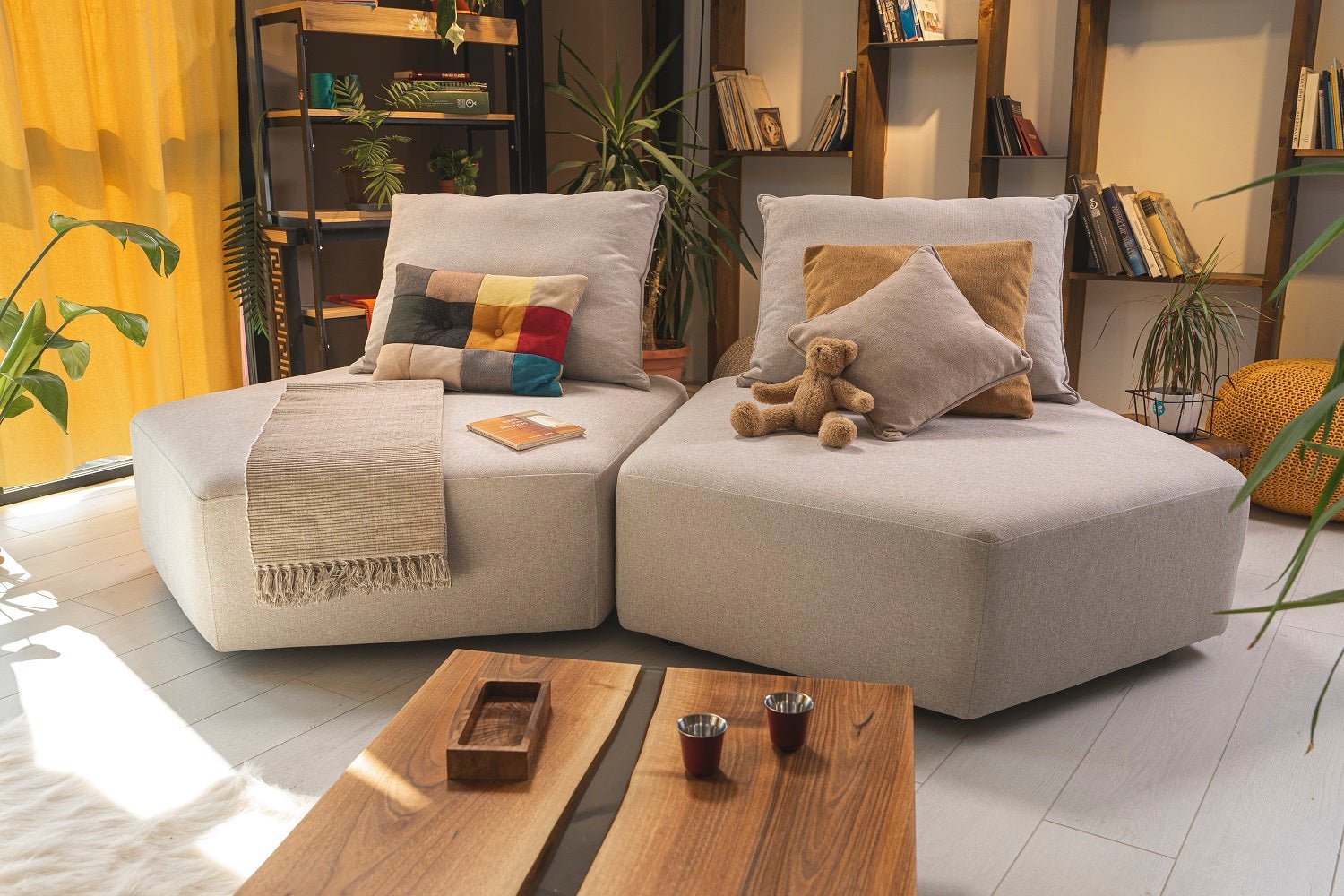
It might not be the first thing you think about when buying a couch, but sustainability has become increasingly important in the furniture industry. And rightly so: Conscious and responsible consumption is crucial not only for ourselves but also for the environment. A sustainable couch isn't just good for your conscience; it also protects your health and will bring you joy for years and even decades to come.
But what should you look for when buying a sustainable sofa? What distinguishes genuine sustainability from mere "greenwashing"? In this guide, we want to show you what to consider when buying a sustainable sofa and why Livom sofas might be the perfect choice.
Livom is a young furniture manufacturer committed to sustainability and responsible consumption. Their goal is to educate customers about the origin and production of their products, encouraging them to consciously choose local materials. Unlike many other furniture manufacturers, Livom focuses on European woods such as oak, beech, spruce, and larch. Tropical woods, which are commonly used, are often produced under poor conditions in distant countries and contribute to environmental pollution through long transport routes.
Livom works closely with select furniture manufacturers in Europe to keep transport routes as short as possible and actively contribute to environmental and climate protection. The company aims to make the production and processing of its furniture as transparent as possible, thereby contributing to a societal shift towards more responsible consumer behavior.
Sustainability in furniture manufacturing
The idea of sustainability in furniture production is not new, but it has gained importance in recent years. Sustainability means that the resources used for furniture production are used as efficiently as possible in order to minimize negative impacts on the environment and society.
One aspect of sustainable furniture production is the use of wood from sustainably managed forests. Sustainable forestry protects the natural habitats of animals and plants while simultaneously offsetting wood consumption through regular reforestation. Other aspects of sustainable furniture production include the use of environmentally friendly materials, such as recycled plastics and metals, as well as the use of energy from renewable sources, both in the production and transport of furniture.
Sustainable furniture production means even more: furniture manufacturers must also live up to their social responsibility. This means that companies must ensure that all employees involved in production are consistently paid fair wages and have good working conditions.
Sustainable production
Perhaps the most crucial criterion when choosing a sustainable sofa is the production method. Therefore, ensure that the piece of furniture was manufactured under the most environmentally friendly conditions possible. This includes, among other things, regional production chains, adherence to high technical standards, and the avoidance of most of the chemicals used in conventional furniture production.
Livom sofas are not only produced in Europe, which means particularly short transport routes and a massive reduction in production CO2 emissions; Livom production facilities are also powered 100% by solar energy. Furthermore, Livom committed itself many years ago to reducing the use of chemicals in furniture production.
Use of sustainable materials
Another important criterion when searching for a sustainable couch is the use of sustainable materials. These materials include, for example, wood that comes from responsible sources and therefore contains very few pollutants.

Livom sofas are made from FSC-certified wood sourced from carefully selected forestry operations that contribute to sustainable forest management. Furthermore, Livom adheres to the Oeko-Tex Standard 100 in the production of its upholstery, guaranteeing that the covers are free of harmful substances and therefore suitable for allergy sufferers.
Durability and repairability
To ensure that you and the environment can enjoy your couch for a long time, it should last as long as possible. Any damage that may occur should also be easy to repair.
The longevity of a sofa is influenced by numerous factors. One of these is the quality of the materials used. High-quality materials, such as sturdy wood or durable upholstery, contribute to a piece of furniture maintaining its quality for decades – both visually and functionally. Ease of care also plays a crucial role: sofas with removable covers that can be machine-washed are easier to keep hygienically clean and remain in good condition for longer.
Livom sofas are exceptionally durable because they are made from high-quality materials and meticulously crafted. They feature removable covers that are machine washable, making them particularly easy to care for. Furthermore, Livom offers the option of replacing individual covers or modules instead of replacing the entire sofa. This allows you to repair your sofa time and time again, rather than having to buy a new one at the first sign of damage.
Modularity as a sustainability factor
To ensure a high degree of durability, sustainable sofas are typically modular in design. Modularity means that the piece of furniture consists of individual parts that can be replaced independently. This offers several advantages that are particularly interesting for sustainability-conscious buyers.
A key advantage of modularity is that you can adapt the sofa to your needs at any time. For example, you can extend it to create more space or rearrange it to better integrate it into your living room. Furthermore, if the sofa is damaged or worn, you don't have to replace the entire unit; it's enough to replace the affected module. This not only saves money but also reduces waste and therefore the environmental impact.
Livom couches have always been known for their modularity. They offer buyers a wide range of options to customize their couch, adapting it to their changing needs time and time again. This means you don't have to sell or even dispose of your couch before moving; you can simply integrate it perfectly into your new home.
Easy care
Another important criterion when choosing a sofa is ease of care. The easier a sofa is to maintain, the less often it needs cleaning and the less wear and tear it will show. One factor influencing ease of care is the materials used. Easy-care fabrics like faux leather or microfiber can be simply wiped clean with a damp cloth and are particularly durable. Removable covers also contribute to a sofa's ease of care, as they can simply be washed in the washing machine. This way, you can keep your sofa hygienically clean and it will remain in good condition for a long time.
Livom sofas are particularly easy to care for, as they are made from high-quality materials and have removable covers that can be machine-washed at 30 degrees. Unlike many other sofas, they are therefore easy to clean and remain visually pristine for decades.
Sustainable commitment
The manufacturer's commitment to sustainability, extending beyond the conversion of production processes, is also crucial. Livom plants two trees for every couch sold to make an additional contribution to climate protection. This commitment helps to further reduce CO2 emissions and preserve forests.
Summary
If you're looking for a sustainable sofa, you should pay attention to numerous different criteria. Sustainability of production, the type of materials used, and the durability and repairability of the piece of furniture are particularly important. Modularity and ease of care also play a significant role.
As a sustainable furniture manufacturer, Livom fulfills all these criteria from the ground up. Livom sofas are therefore the perfect choice for anyone who places particular value on sustainability and environmental protection. The furniture is produced in Europe using exclusively renewable energy; the wood comes from responsibly managed forests, and the upholstery meets the highest environmental standards. Furthermore, Livom sofas are exceptionally durable and easy to repair.
We hope this guide has helped you in your search for a sustainable couch. Perhaps you'll even decide on a Livom couch: not only will you enjoy it for a long time, but you'll also make an important contribution to protecting the environment.
Checklist for sustainable furniture
In summary, here is a checklist you can use when searching for a sustainable couch:
- Find out about the production conditions and the materials used. Make sure that the couch was manufactured under the most environmentally friendly conditions possible and that the manufacturer has regional production chains.
- Check if the couch comes from a manufacturer that adheres to high technical standards in production and uses as few chemicals as possible.
- Choose a sofa made from sustainable materials, such as oak, beech, or spruce, instead of tropical hardwoods. The latter are often produced under poor conditions in distant countries and pollute the environment due to long transport routes.
- Look for certificates, such as the FSC seal.
- Make sure the couch is as durable and easy to repair as possible. Ideally, buy a modular piece of furniture. This conserves resources and helps reduce waste.
- Research the manufacturer and check if they are transparent about their production conditions and materials. A company that is open about its practices often maintains higher standards.
- Choose a couch that suits your lifestyle and needs. A sustainable couch that you don't use isn't a sustainable couch.
- Take the opportunity to share your decision to choose sustainable furniture and inspire others to consume sustainably as well. Every decision counts and can contribute to a more sustainable future.
FAQ
What does sustainability mean when it comes to couches?
Sustainability in sofas is primarily defined by their production and the types of materials used. Production chains should be as regional as possible, and individual production facilities should adhere to high technical standards. Furthermore, the manufacturing process should use as few chemicals as possible. Unlike conventional sofas, sustainable furniture is made from sustainable materials such as oak, beech, spruce, or larch.
How can I ensure that I buy a sustainable couch?
A key factor when buying a sustainable sofa is the manufacturer's transparency. Therefore, inquire about the production conditions and the materials used in the sofa's manufacture. Compliance with environmental standards and certifications, such as the FSC (Forest Stewardship Council), can also indicate sustainable production methods.
Why are Livom couches particularly sustainable?
Livom is a young Swiss furniture manufacturer committed to sustainability and responsible consumption. Their sofas are produced exclusively in Europe, resulting in short transport routes and low CO2 emissions. Furthermore, Livom's production facilities are powered by 100% solar energy, and the company is committed to reducing the use of chemicals in furniture production. Livom sofas are made from sustainable materials and feature easy-care upholstery.