When it comes to decorating your home, there are countless styles and trends to choose from. One of these styles, which has become increasingly popular in recent years, is minimalist interior design. In this article, we'll take a closer look at this style and give you tips and tricks on how to implement it in your own home.
What is the minimalist interior design style?
The minimalist interior design style is characterized by simplicity, clarity, and functionality. Instead of cluttered frills, this style relies on clean lines, neutral colors, and a few, but high-quality, pieces of furniture. The goal is to open up the space and create a calm, stress-free environment.
The minimalist interior design style originates from the minimalism movement, which aims to reduce material possessions and focus on the essentials. By consciously choosing to own only what is necessary, life is meant to become simpler and less stressful.
There are several characteristics that define the minimalist interior design style. These include:
- Simple and clean lines in furniture and decoration
- Use of neutral colors such as white, beige or grey
- Reduced number of furniture pieces and decorative objects
- Functionality is paramount.
Another characteristic of the minimalist interior design style is the use of natural materials such as wood, concrete, or glass. These materials lend the room a simple elegance and create a harmonious atmosphere.
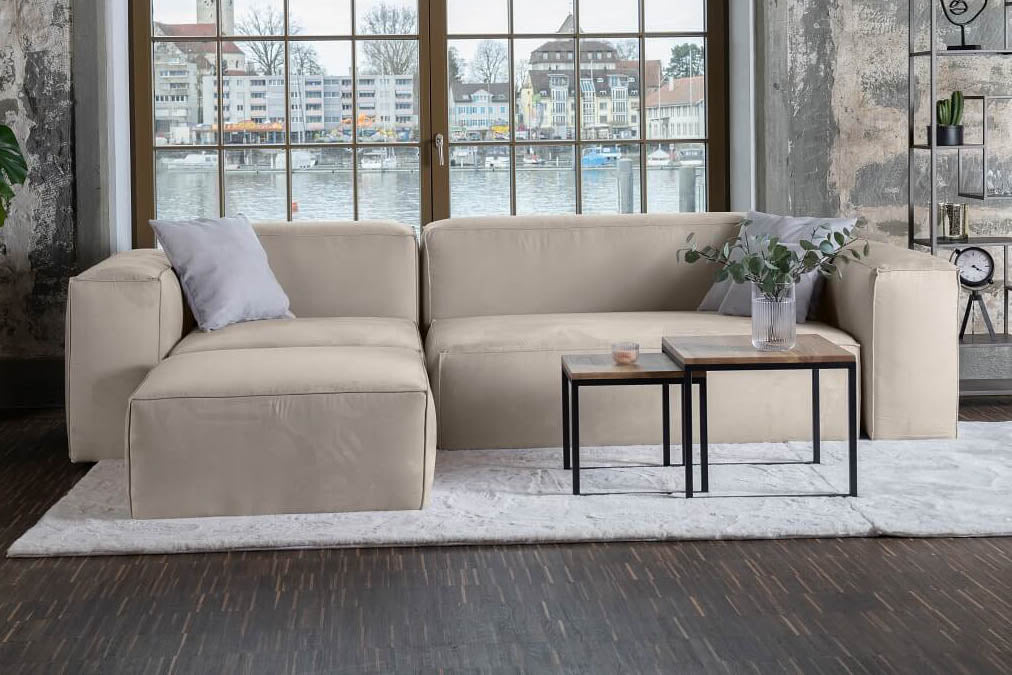
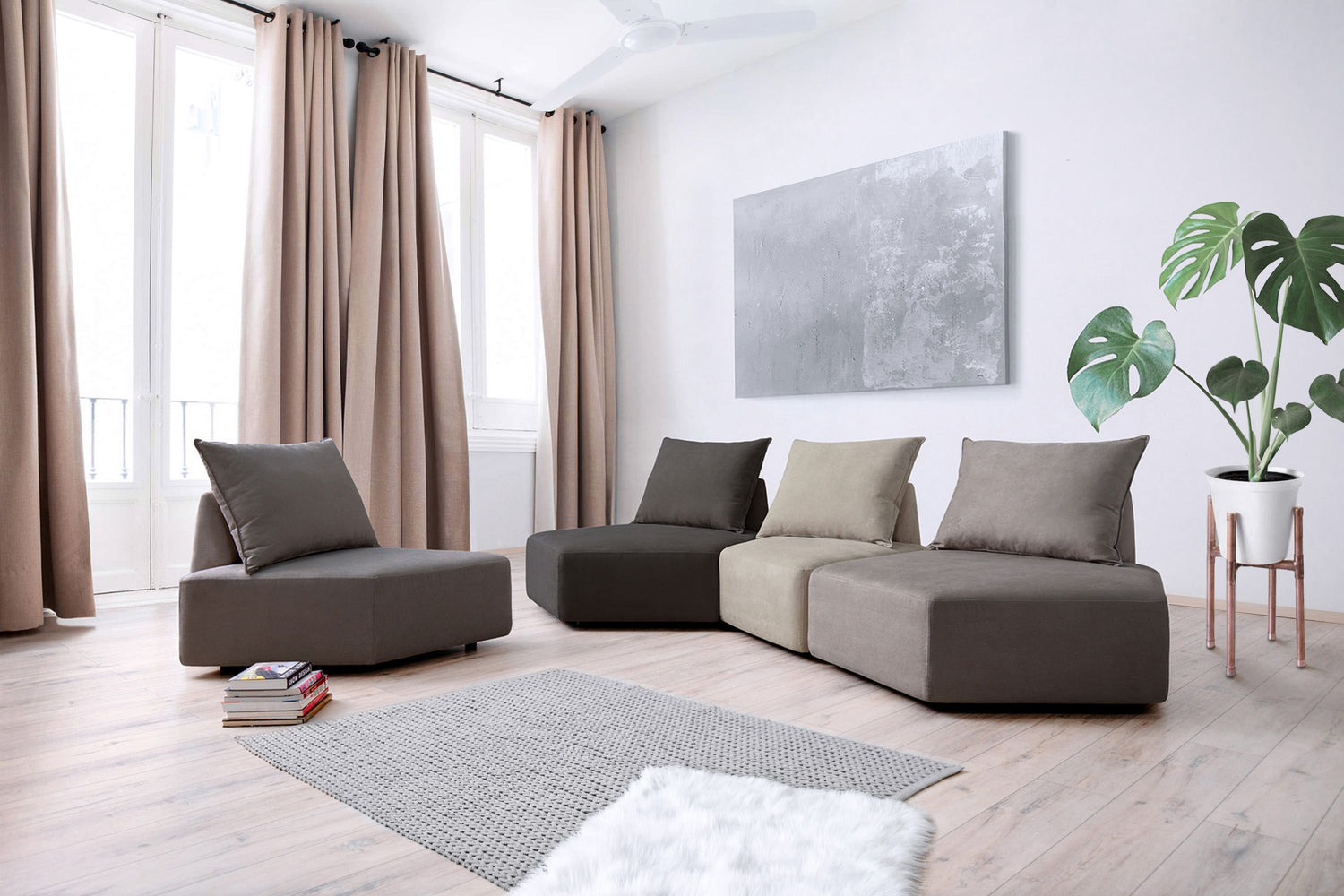
A minimalist living room might, for example, feature a simple sofa, a wooden coffee table, and a discreet floor lamp. The walls are painted in neutral colors, and only a few carefully chosen decorative objects, such as a vase of fresh flowers or an abstract painting, adorn the room.
Here's an example using our modular sofa Harvey :

A minimalist bedroom often features a bed with a simple wooden frame, white bedding, and a couple of stylish nightstands. The room is uncluttered and free of unnecessary items to create a calming and relaxing atmosphere.
The minimalist interior design style can also be implemented in the bathroom. Here, clean lines and simple shapes dominate. White tiles, a simple vanity, and a large, freestanding bathtub are typical elements of a minimalist bathroom.
The minimalist interior design style is not only aesthetically pleasing but also offers practical advantages. By reducing unnecessary possessions, the space appears larger, and cleaning and maintenance are made easier. Furthermore, a minimalist home can contribute to better concentration and relaxation.
Advantages of the minimalist interior design style
The minimalist interior design style offers numerous advantages that can help create a harmonious and relaxing home.
Simplicity and clarity
By focusing on the essentials, the minimalist interior design style creates an atmosphere of simplicity and clarity. Less clutter means less distraction and more space for relaxation.
The simplicity of minimalist interior design allows residents to focus on what's essential and avoid unnecessary distractions. The clean lines and minimalist design of the furniture and decorations create a calming atmosphere that promotes relaxation.
Another advantage of the simplicity and clarity of the minimalist interior design style is the ease of maintenance and cleaning. Fewer items mean less dust and dirt, which simplifies housework and leaves more time for other activities.
More space and less clutter
Reducing the number of furniture and decorative objects makes the room appear larger and more open. Furthermore, a tidy and organized space reduces stress and promotes mental well-being.
The minimalist design creates space to breathe and allows residents to move more freely. Reducing unnecessary objects creates a feeling of lightness and spaciousness, making the room appear larger.
Another benefit of reducing clutter is improved concentration and productivity. A tidy space promotes a clear mind and allows its occupants to focus better on their tasks. This can be advantageous both in private and professional settings.
In summary, the minimalist interior design style is not only aesthetically pleasing but also offers numerous benefits for the well-being and quality of life of its inhabitants. By creating a simple, clear, and uncluttered environment, a harmonious and relaxing home can be established.
Tips for implementing a minimalist interior design style
If you want to implement the minimalist interior design style in your own home, there are a few tips that can help you achieve the desired look.
The minimalist interior design style is characterized by its simple elegance and clean lines. It creates a calm and unobtrusive atmosphere that invites relaxation and well-being.
To successfully implement this style, choosing the right colors is crucial. Neutral colors like white, beige, and gray form the basis of the minimalist interior design style. They create a harmonious and timeless aesthetic. Accent colors can be used sparingly to refresh the room and give it a personal touch.
Another important aspect of implementing a minimalist interior design style is the choice of furniture. Clean lines and simple design are crucial. Avoid cluttered furniture and instead opt for functional, high-quality pieces. Less is more – that's the motto of the minimalist style.
When it comes to decoration, restraint is key. A few carefully chosen decorative objects can visually enhance the room without overwhelming it. Plants can be a wonderful addition, bringing life to the space. However, be careful not to use too many plants to maintain the room's minimalist character.
Another tip for implementing a minimalist interior design style is to store items out of sight. Use closed cabinets and shelves to avoid clutter and create a tidy atmosphere.
The minimalist interior design style is not only aesthetically pleasing but also practical. The clear structure and reduced design visually enlarge the room, making it feel airy and open.
In summary, implementing a minimalist interior design style requires adherence to some basic principles, such as selecting the right colors, furniture, and decorations. With some planning and creativity, however, you can create a harmonious and stylish home that exudes peace and relaxation.
Avoiding the pitfalls of minimalist interior design
Although the minimalist interior design style offers many advantages, there are also some pitfalls that should be avoided.
Too empty and impersonal?
Sometimes the minimalist style can feel too empty or impersonal. To counteract this, you should incorporate personal items such as family photos or mementos into the decor to give the room a personal touch.
How to preserve warmth and coziness
A minimalist room can sometimes feel cold and unwelcoming. To maintain warmth and coziness, you can use textiles such as cushions , rugs , or curtains. Natural materials like wood can also create a warm atmosphere.
Another important aspect of minimalist interior design is proper lighting. Cleverly placed light sources can create a pleasant and inviting atmosphere. For example, use dimmable lamps to adjust the brightness to your needs. This guide tells you everything you need to know: The right lighting for your living room .
A minimalist living room can be made more interesting with the right choice of furniture and accessories. Opt for pieces with interesting shapes or unusual materials to add a touch of drama to the room. Remember that less is often more – choose carefully and avoid excessive decoration.
A minimalist bedroom should be a place of peace and relaxation. Therefore, choose calming colors such as white, beige, or soft pastel shades. Avoid too many patterns and keep the furnishings simple and uncluttered. A large, comfortable bed and high-quality bedding will ensure a restful sleep.
In a minimalist bathroom, it's important to keep things tidy and use only the most essential items. Opt for simple yet high-quality fixtures and choose a color palette that exudes calm and cleanliness. Using natural materials like marble or wood can add a touch of luxury to the room.
A minimalist workspace should be free of distractions. Choose a simple desk and a comfortable chair to enable productive work. Keep the room tidy and organize your documents in practical storage solutions.
Minimalist interior design examples
To give you an idea of what the minimalist interior design style can look like, we have compiled some inspiring examples of minimalist living rooms, bedrooms and kitchens.
Minimalist living rooms
In a minimalist living room, clean lines, neutral colors, and sparingly used decorative elements dominate. A large, open space creates a relaxed atmosphere where you can unwind.
Minimalism in interior design doesn't mean sacrificing comfort. With a carefully chosen selection of furniture and accessories, a minimalist living room can still be inviting and cozy. A comfortable sofa in neutral colors, combined with a minimalist coffee table and a few decorative cushions, creates a harmonious balance between functionality and aesthetics.
Another characteristic of a minimalist living room is the reduction of visual clutter. This means that electronic devices such as televisions and stereo systems should be discreetly placed so as not to distract from the overall aesthetic. Instead, a minimalist living room can offer a focal point through the use of artwork or a striking plant.
Minimalist bedrooms
The minimalist bedroom is all about creating a calm and peaceful environment. A few pieces of furniture, a simple color scheme, and a tidy atmosphere offer you the perfect retreat for relaxation and rejuvenation.
A minimalist bedroom is characterized by clean lines, neutral colors, and a minimalist furniture selection. A bed with a simple design and high-quality materials takes center stage in the room. To reinforce the minimalist concept, you can forgo nightstands and instead use wall shelves to display books or a small lamp.
The choice of colors plays a crucial role in a minimalist bedroom. Light and neutral shades like white, beige, or gray create a calming atmosphere and make the room appear larger and more open. Accent colors can be used sparingly to add personality to the room without overwhelming the minimalist concept.
Minimalist kitchens
In a minimalist kitchen, functionality takes center stage. Clear work surfaces, well-organized cabinets, and high-quality appliances ensure a stress-free cooking experience.
The design of a minimalist kitchen focuses on clean lines, simple shapes, and a limited color palette. White or light-colored kitchen cabinets, combined with a countertop made of wood or stainless steel, create a timeless aesthetic. To complete the minimalist look, kitchen appliances and utensils should be carefully selected, and only those that are truly needed should be kept.
Another characteristic of a minimalist kitchen is its organization. By using clever storage solutions such as drawer organizers, hanging rails for kitchen utensils, and well-designed cabinet systems, the workspace is kept tidy and efficient. A minimalist kitchen style allows you to enjoy your cooking without being distracted by clutter.
Conclusion: Implementing minimalism in your own home
The minimalist interior design style offers many advantages and can help create a harmonious and relaxing home. With the right colors, furniture, and decorative objects, as well as a few personal touches, you can implement the minimalist style in your own home. Try it out and experience the benefits of a minimalist lifestyle.
Minimalism is not just an interior design style, but also a philosophy of life. It's about focusing on the essentials and freeing yourself from unnecessary clutter. By designing your home in a minimalist style, you create not only an aesthetically pleasing environment, but also a calm and uncluttered atmosphere that can have a positive impact on your well-being.
A key aspect of minimalist interior design is the use of neutral colors such as white, gray, and beige. These shades create a timeless and calming atmosphere, making your home appear larger and more airy. Combine these colors with natural materials like wood and linen to create a warm and inviting charm.
When choosing furniture, you should pay attention to simple and functional designs . Avoid cluttered and playful pieces and instead opt for clean lines and a minimalist aesthetic. Less is definitely more here. Choose high-quality furniture that is durable and will bring you joy for many years to come.
To give your minimalist home a personal touch, you can strategically place accents. Choose one or two decorative objects that are particularly meaningful to you and place them strategically in your living space. These could be artwork, plants, or mementos, for example. These carefully chosen accents will transform your minimalist home into a unique and individual retreat.
Besides its aesthetic appeal, the minimalist interior design style also offers practical advantages. By reducing unnecessary possessions, you create more space and order in your home. You'll find that you spend less time tidying and cleaning and have more time for the things that are truly important to you. Furthermore, minimalism promotes more conscious consumption and can thus contribute to a more sustainable lifestyle.
If you implement a minimalist interior design style in your home, you'll discover that less really can be more. By consciously selecting colors, furniture, and decorative objects, you create a harmonious and relaxing environment that brings you peace and serenity. Try it out and let yourself be convinced by the advantages of a minimalist lifestyle.