The right combination of patterns can bring your decor to life and give it a vibrant personality. Although it may seem easy to mix different patterns, there are some basic principles you should keep in mind to achieve a harmonious and appealing look.
Fundamentals of pattern combination
Understanding different pattern types
Before combining different patterns, it's important to understand the different types of patterns. There are geometric patterns like stripes, checks, and circles; floral patterns with flower motifs; abstract patterns; and many others. Each pattern speaks a different language and creates a specific mood. Understand these differences and choose patterns that harmonize with each other.
Geometric patterns are often symmetrical and structured. They can convey a sense of order and stability. Stripe patterns, for example, can create a linear dynamism, while checkered patterns exude a certain regularity and calm.
Floral patterns, on the other hand, are organic and playful. They can create a romantic and cheerful atmosphere. Floral patterns can depict various types of flowers and plants, thus bringing a natural and vibrant touch to a room.
Abstract patterns are often unpredictable and can create a certain tension. They can combine different shapes and lines to create an interesting and creative look.
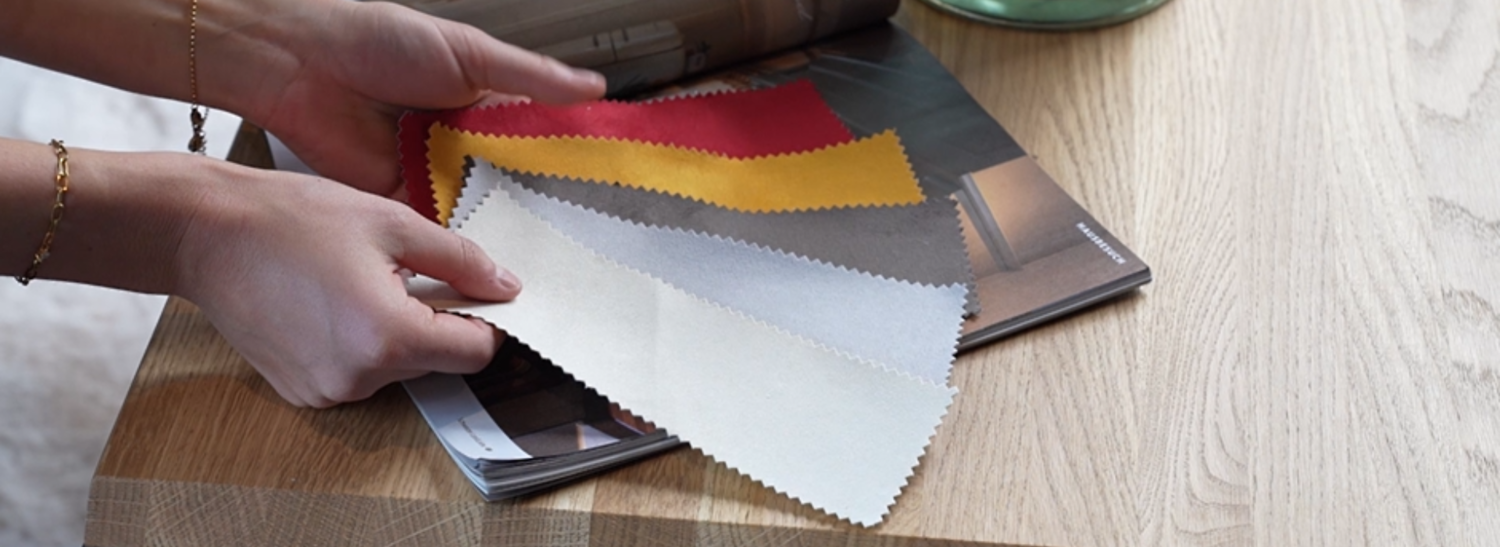
Order your free fabric samples now and find the perfect sofa cover for your pattern combination.
The meaning of colors in patterns
The colors in the patterns also play an important role in the overall combination. While some colors complement each other harmoniously, others can contrast with each other. For example, warm and inviting colors like orange and yellow can be combined well with cool colors like blue and green. Make sure that the colors in the patterns match each other to create a balanced and appealing overall look.
Colors have a strong emotional impact and can influence the mood of a room. Red, for example, can convey passion and energy, while blue can have a calming and relaxing effect. Yellow can radiate joy and optimism, while green is associated with nature and freshness. Learn more about the effects of colors in this blog post: The Psychology of Colors
When combining patterns, it's important to consider the colors within the patterns. If the colors harmonize, the patterns can work together seamlessly and create a cohesive design. However, if the colors contrast with each other, this can lead to an interesting and dynamic effect.
Practical tips for pattern combination
How to combine large and small patterns
A tried-and-tested method for combining different patterns is to use a mix of large and small designs. For example, if you have a large floral pattern for your curtains, you can choose smaller geometric patterns for your cushion covers. This creates a visual contrast and allows the patterns to complement each other rather than compete.
Combining large and small patterns can also help balance the proportions of a room. For example, if you have a room with high ceilings, you can use a large pattern on the walls to visually shrink the space. Conversely, small patterns can be used to make a room with low ceilings appear larger.
It's also important to consider the colors of the different patterns. When combining large and small patterns, make sure they share or harmonize colors. This creates a visual connection between the different patterns and ensures a cohesive design.
Discover our modular sofas with washable and interchangeable covers.
Use patterns in different rooms
Different rooms have different needs and styles. A bold and eye-catching pattern can look fantastic in a living room, while it might appear too busy in a bedroom. Consider the purpose of a room and choose patterns accordingly.
A hallway, for example, can benefit from a rug with a striking geometric pattern. This can make the space feel more vibrant and inviting. On the other hand, a quiet reading room can appear more elegant with a subtle floral pattern on an armchair. The pattern adds a touch of sophistication to the room without being overwhelming.
It's also important to consider the size of the room when choosing patterns. In a small room, large patterns can be overwhelming and make the space feel smaller. Conversely, in a large room, small patterns can get lost and make the room seem dull. Choose patterns according to the room's size to achieve a balanced and harmonious design.
Common mistakes when combining patterns
Avoid overloaded patterns
One of the most common mistakes when combining patterns is using too many at once. This can lead to a cluttered and chaotic look. It's important to find a balance and use no more than two or three main patterns. Use neutral and solid-colored elements to calm the eye and give the patterns room to breathe.
Finding the right balance
When combining patterns, it's all about finding the right balance. Don't just use patterns on one piece of furniture, like a sofa , but distribute them across other elements in the room. Consider walls, curtains, cushions , rugs , and other accessories as opportunities to incorporate patterns. This creates a harmonious overall look and makes the room more interesting and vibrant.
Pattern combinations for different interior design styles
Examples of minimalist interior design
Minimalist interiors are characterized by simplicity and cleanliness. If you want to use patterns in a minimalist space, choose small and subtle patterns that won't overwhelm you. Stripes or geometric patterns in neutral colors like white, gray, or beige can be a perfect complement to minimalist furniture. For example, you could choose a sofa made of corduroy fabric with only a light pattern. You can order free fabric samples here to see for yourself. to find suitable patterns for your sofa.

Patterns for rustic furnishings
Rustic interiors often have a cozy and natural character. To incorporate patterns into a rustic room, consider traditional designs such as plaid fabrics or floral motifs. These can be featured on cushions , curtains, or rugs , emphasizing the room's rustic charm.
Final thoughts on pattern combination
How to find your own style
Ultimately, combining patterns is about finding and expressing your own style. Experiment with different patterns, colors, and styles to discover what you like best. Remember to incorporate your personality and preferences into your decor, and be bold when combining patterns!
Courage to experiment with patterns
The most important tip we can give you is to have the courage to experiment with patterns. It might be a little overwhelming at first, but don't be intimidated. Try different combinations and see how they work in your space. With a little practice, you'll develop a feel for which patterns go well together and take your decor to a new level.
These decorating tips will help you skillfully combine different patterns in your home. Remember, the goal is to create a harmonious and appealing overall look that reflects your personality. Have fun experimenting and bring your home to life by combining patterns!